
Response to Rabbi Wander: “Stop Calling Jesus an ‘Orthodox Rabbi’”
He was a Second Temple period rabbi. I would object to denying him that title—and that fact matters for Jews and Christians.

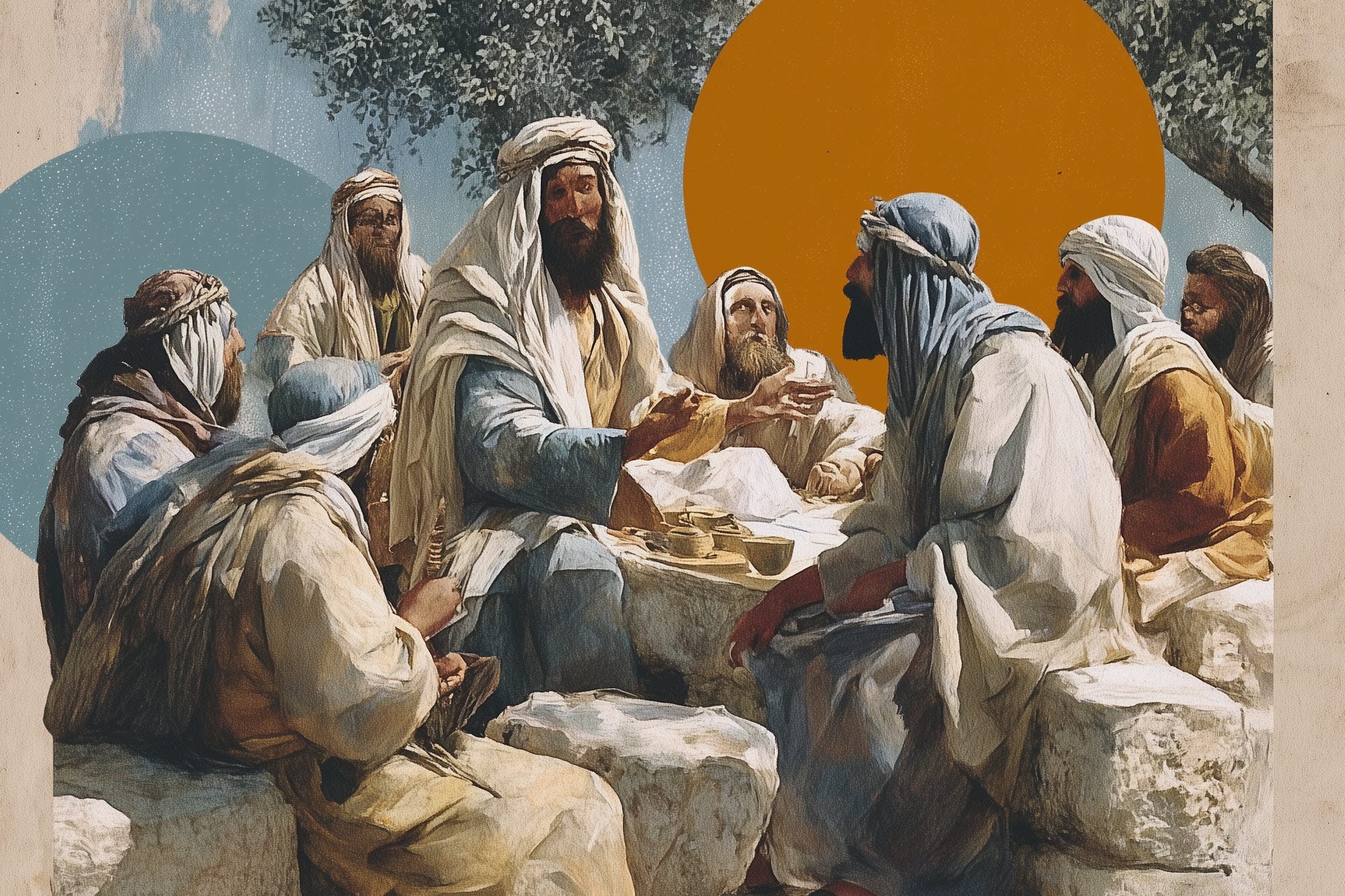
I am honored by Rabbi Joshua Wander’s invitation to respond to his recent article, “Stop Calling Jesus an ‘Orthodox Rabbi’” (Geula Movement, Feb 13, 2026). He raises important questions that merit a careful response. I agree that it is anachronistic to call Jesus an Orthodox rabbi. But he was indeed a Second Temple period rabbi. I would object to denying him that title, and this fact serves important purposes.
I concede that the “Orthodox” label is anachronistic. The comparison to calling King David a “democracy activist” makes the point with some humor, though it may be equally anachronistic to call King David an “Orthodox rabbi.” Informally, of course, the intended message is clear: the historical Jew, Yeshua (Jesus), was a rabbi who practiced and taught Torah within the broad stream of Second Temple Jewish traditions.
To make that point more accurately, I suggest saying he was a Torah-keeping rabbi of his time. This avoids anachronism and does not imply that later Orthodox Judaism somehow approves of Jesus—an implication I can understand why many Jews would find troubling.[1]
A Matter of Record
However, it is the word “rabbi” itself that Rabbi Wander takes the strongest objection to. As a matter of historical record, Yeshua was indeed a Second Temple period rabbi. One can find Christian or liberal scholarship that denies this (often because the authors are uncomfortable with Judaism), but there are also many Christian and Jewish scholars—secular and Orthodox alike—who affirm the fact. Among them are David Flusser (1917–2000), the Orthodox Jewish professor at Hebrew University and author of The Sage from Galilee (2007); scholars Philip Sigal; Pinchas Lapide; and, on the Christian side, Brad Young, Bruce Chilton, Craig A. Evans, and others.[2]
I have partly addressed this question myself in a theological paper written during my studies at the Scandinavian School of Theology (Enarson 2022). Discussing Yeshua’s rabbi-talmid relationship, I argue that his discipleship model is indeed unique. I also note that the post-Yavneh rabbinic model is more formally developed. Yet I demonstrate that scholars like M. J. Wilkins overestimate the differences between Jesus and the early rabbis. The Gospels place Jesus’ form of discipleship squarely within the Jewish framework of a rabbi with talmidim—a model that appeared strikingly on Israel’s historical scene in his Jewish context. This model belongs to a Jewish tradition that has clear continuity with the rabbinic model after Yavneh.
Classifying Yeshua as outside his early rabbinic context is an interpretive choice, whether made for Christian or Jewish reasons, that emphasizes discontinuity with Judaism over the historical evidence. As I argue in the paper:
“The title ‘rabbi’ did not become strictly formalized until after the destruction of Jerusalem and the ascendancy of Yavneh. The first one to be given the official title was ‘Rabban’ Gamliel the Elder (likely the same as Paul’s teacher). In this formal institution, rabbis were trained and ordained with authority by the laying on of hands (smichah).
“‘Now the order of these titles is as follows: “Rabbi” is greater than “Rab”; “Rabban,” again, is greater than “Rabbi”; while the simple name is greater than “Rabban.” Besides the presidents of the Sanhedrin no one is called “Rabban.”’[3]
“However, Hershel Shanks was right that ‘When the title rabban was officially bestowed on Gamaliel, the word was not coined for that purpose. It was not taken out of thin air. ... It must have had some development between biblical times and the Destruction.’[4] This more informal use must be what we see evidenced in the Gospels.
“People addressed Jesus as a ‘rabbi.’ He is called this by ‘his disciples (Mk. 4:38; 9,38), common people who listened to him (Mk. 9:17), Torah teachers (Mt. 22:35-36), Pharisees (Lk. 19:39), Sadducees (Lk. 20:27-28), the rich man (Mt 19,16), etc. Hence, besides the fact that Jesus refers to himself in this manner, he is also called “rabbi” by his supporters, opponents, and nonpartisans.’[5] The Gospel of Matthew gives evidence that this was a title the ‘scribes and the Pharisees’ were particularly fond of (Mt 23:7), once again showing some kind of proximity between Jesus and the proto-rabbinic movement. The fact that this stream of Judaism in particular institutionalized the term later, also implies that it previously had special significance to their tradition as opposed to others.
“Since rabban was later used as the version with the highest honor, it is noteworthy that Jesus is twice addressed with a form of rabban in the Gospels (Mk 10:51; Jn 20:16). John’s candid narrative of Mary Magdalene and Jesus in the garden is particularly instructive. The Greek in John becomes more intimate by switching to render Mary’s authentic, Semitic name as Jesus addresses her with ‘Mariam (Μαριάμ).’ Mariam responds with a spontaneous outburst of ‘Rabbuni!’ This suggests that some form of ‘rabban’ would have been the most spontaneous and familiar expression used by his disciples to address him.
“The later institutionalization and emphasis on rabbinic smichah also make an early appearance in the Gospels where much is made of the question of where Jesus’ exousia [authority] comes from. Jesus’ method of using the style of parables he does to teach his talmidim is also another feature which is distinctly rabbinic.[6] This is not the place for an extensive comparison between the Gospels and Pharisaic tradition. But, if we incorporate the Gospel evidence, I suggest defining ‘rabbi’ in its informal Gospel usage as a proficient (possibly authoritative) Jewish teacher and interpreter of Torah, with accompanying Oral traditions, who was in proximity to—or part of—the proto-rabbinic tradition. This stands in contrast to defining Jesus as having adopted a generic teacher-student model of the ancient world and fashioned his own version distinctly outside the Pharisaic discipleship model.”[6b]
“a proficient (possibly authoritative) Jewish teacher and interpreter of Torah, with accompanying Oral traditions, who was in proximity to—or part of—the proto-rabbinic tradition.”
As a matter of practical reality, one will also not be able to excise the concept that Jesus was a Second Temple period rabbi from Christian faith. Some of the most intimate moments of the New Testament are records of Second Temple Jews calling Jesus “rabbi” and “rabban.”
On the Parting of the Ways
Rabbi Wander argues that calling him a “rabbi” obscures the fact that “the movement that formed around him broke sharply from normative Judaism and evolved into an entirely different religion. History isn’t blurry here. It’s quite clear.” He contends that calling Jesus a rabbi “makes Christianity seem like a friendly offshoot of Judaism instead of what it actually became: a separate theological universe with fundamentally incompatible beliefs.”
I would take exception to this on historical grounds. First, as documented above, the title “rabbi” had not yet been formalized before the destruction of the Second Temple, and not exclusive to particular academies. Jesus was called “rabbi” and “rabban” by his contemporaries. This is not a later theological claim but a matter of historical record preserved in primary sources.
Second, while it is true that the movement around Yeshua eventually evolved (I would say partly distorted) into a separate faith with significantly different theological commitments, the “parting of the ways” between Judaism and Christianity was gradual, contested, and far messier than Rabbi Wander’s article suggests. It is precisely this complexity that another Jewish religious scholar, Daniel Boyarin of UC Berkeley, documents in Border Lines: The Partition of Judaeo-Christianity (2004). To claim that “history isn’t blurry here” requires overlooking a significant body of Jewish and Christian historical scholarship that demonstrates otherwise.
More Than Politeness: Why It Matters
When Orthodox Jews today tell Christians that Jesus was a “rabbi,” it is more than politeness, politics, or fostering positive emotions. It is rooted in real history and serves an important purpose. It communicates to Christians that they have often misunderstood Yeshua’s relationship to Torah, Judaism, Jewish practice, tradition, and identity. His followers historically called him “rabbi,” and he both taught and kept Torah—not as a sola-scriptura, “Karaite” Jew—but as part of the various traditional streams of Second Temple Judaism, the proto-rabbinic Prushim (Pharisees) being the closest, according to many scholars.
This helps Christians radically reevaluate any non-Jewish or even anti-Jewish perspective on their faith and their relationship to Israel. The argument is not inauthentic; it is faithful to Christianity’s primary sources. In other words, it is fundamentally unlike arguing that the Muslim world should reform its positions on jihad on the basis of a selective reading of the Quran. The claim about Jesus being a “rabbi” is historically true and serves a constructive purpose.
Partners in Redemption?
Beyond historical accuracy, this approach also connects to a broader theological conversation within contemporary Orthodox Judaism. Rabbi Pesach Wolicki (and others) argue, on the basis of Rambam (Laws of Kings 11), that the very authority most often cited to forbid contact with Christians actually teaches the opposite: Christianity, though idolatrous in Rambam’s view and historically disastrous for the Jewish people, is nevertheless a divinely ordained stage in the gradual process of “paving the path for the king Messiah and repairing the entire world to serve Hashem together” (Zeph. 3:9). Wolicki himself notes that there are other great halachists who do not view Christianity for the nations as idolatry at all. Religious Zionists who embrace the State of Israel as atchalta de-geulah (a gradual, humanly-participatory redemption) cannot consistently reject an equally gradual process among the nations. If we are partners in the national redemption, we are also called to be partners in the universal one.
I recognize that those who do not share this theological framework within Orthodox Judaism may see less value in the discussion. If one believes this paradigm poses a dire threat to the Jewish people, the strongest critique would engage directly with the framework itself (cf. Wolicki 2023 et al), rather than with the historical question of whether Jesus was a first-century rabbi.
Interpretive Choices
On the Christian side, I engage with some of these larger, worldview decisions in my paper under “Interpretive Choices:”
“There are points of departure between rabbinic discipleship and Jesus, though these are sometimes overstated, as shown above. There are also striking points of affinity. It is largely agreed that the rabbi-talmid phenomenon, which later became so prominent in Judaism, is markedly [a minor topic] in the Hebrew Bible.[7] But as the Gospels attest, by the time of Jesus, the phenomenon had burst onto the scene of Jewish history. Jesus is then described in terms of a rabbi with talmidim who employed particular Jewish methods and traditions. If one then has to place Jesus at his closest, approximate, historical model, would it not be the rabbi-talmid model?
“Regarding anachronism, rabbinic literature is often approached with heavy skepticism by New Testament scholars, partly because of its complexity for Gentile outsiders who major in Greek,[8] partly from prejudice against Judaism,[9] but foremost, because of its late date of compilation. Wilkins should be commended for citing Longenecker here:
“‘we are dealing with a religious mentality that took great pride in the preservation of the traditional; and while changes due to development or differing circumstances cannot be denied, this desire to preserve the traditional—barring other considerations—minimizes the severity of the problem.’[10]
“I agree and maintain that scholars should lean toward giving rabbinic tradition the chronological benefit of the doubt.[11] There are points of commonality between the proto-rabbinic movement and Jesus in his time. These parallels become even more striking after Jesus. Since these parallels come later, they may have no bearing on the historical reality of the early first century. But they do demonstrate that Jesus was part of a particular Jewish continuum from before Hillel to after Yavneh. …
“The Judaism of the Pharisees, sages, and later rabbis went through developmental stages from Hillel and Shammai to more formalized rabbinic training after Yavneh and beyond. Yet the post-Yavneh, rabbi-talmidim model clearly saw itself as having intense continuity with the tradition of Hillel and Shammai prior to Jesus. Regardless of further development, or idealistic views of the past by later rabbis, this continuity must have some merit. …
“Clearly, the ‘polemical affinity’ displayed in the Gospels shows that the Pharisees considered him to be some part of their tradition. One is hard pressed to find any religious movement closer in history. Paul apparently felt comfortable to be part of the Jesus-movement for many years and continue to identify as a ‘Pharisee, son of Pharisees,’ a claim which the Paul Within Judaism (PWJ) perspective takes seriously [as well as Paul’s contemporaries did in the Sanhedrin of the first century (Ac 23:9)].”[12]
Concluding Words
A Christian who acknowledges that Jesus was indeed a rabbi who kept and taught Torah in the traditional Jewish manner of his day will find it far harder to argue that Jewish rabbis are a priori bad or evil, or that Judaism’s practice is fundamentally illegitimate. It fosters appreciation that Jews continue to follow the covenant of Torah and it raises theological questions of how to square that with Christian readings of the Bible. This is both true and good for everyone involved.
I appreciate Rabbi Wander’s writings, his engagement for Jewish restoration in Israel and on the Temple Mount, and his deeply important work to encourage the return of Jewish exiles among the Orthodox community. While I may have more openness to Hasidic concepts and their proximity to Gospel theology, I have also learned from his warnings where Hasidic practices may stray into unbiblical superstition.
It therefore feels personally dissonant to see Rabbi Wander make this a wedge issue between Jews and Christians. If he does not see Christians as partners in redemption, I can understand. But I would encourage him to remain faithful to the historical complexities and to respect that ever more Christians acknowledge Jesus as their own Rabbi—and that this acknowledgment fosters among us genuine regard for the Orthodox rabbis who carry that tradition forward today.
—
John Enarson is an author and Christian theology student from Sweden. He has lived in the Middle East for over 25 years and currently serves as the Christian Relations Director at Cry For Zion (cryforzion.com). He is happy to receive input or questions about his articles at j.enarson (at) gmail (dot) com.
Notes
[1] We are probably both aware that there exist ethnically Jewish followers of Jesus who would argue that he is entirely compatible with later Orthodox Judaism and its halachah. It is outside the scope of this article and I am not arguing that question here.
[2] Regardless of each Jewish or Christian scholar’s personal piety, their historical scholarship will have to stand on its own merits.
[3] Sherira Gaon, cited by Singer, Broydé, Jacobs, Eisenstein, Kohler, and Landsberg 1906, 294.
[4] Shanks 1963, 340.
[5] Gracin and Budiselić 2022, 215.
[6] Cf. Young 1998.
[6b] Enarson 2022, 6–7, emphasis added.
[7] Cf. Wilkins 2015, 43.
[8] As Blomberg warns, “mastering it all is virtually impossible for anyone who was not raised in those branches of orthodox Judaism that still require school children to study a huge amount of their ancient literature” (Blomberg 2009, 41).
[9] Cf. Young 2007, 5.
[10] Wilkins 2015, 118 citing Longenecker 1975, 24–25.
[11] Note that Neusner declared in an influential article in 1978 that rabbinic writings should not be trusted prior to their compilation, only to significantly reverse some of his positions after much investigation, particularly regarding halachic material. “Now, after decades of painstaking work by Neusner and many other scholars, it is becoming clear that the halakic rabbinic collections are indeed accurate with regard to the named attributions. ... G. Stemberger agreed: ‘The study of extensive text units (e.g. by J. Neusner) has shown that at least in Tannaitic collections these attributions are largely reliable’” (Instone-Brewer 2013, 764–765).
[12] Enarson 2022, 7–8.
Bibliography
Blomberg, Craig L. Jesus and the Gospels: An Introduction and Survey. 2nd ed. Nottingham: Apollos, 2009.
Boyarin, Daniel. Border Lines: The Partition of Judaeo-Christianity. Philadelphia: University of Pennsylvania Press, 2004.
Enarson, John. “Jesus’ Jewish Discipleship Model in the Gospel Tradition.” Paper submitted for BVNT 310 Jesus and the Gospels, Scandinavian School of Theology, Spring 2022. https://www.academia.edu/86173815/Jesus_Jewish_Discipleship_Model_in_the_Gospel_Tradition.
Flusser, David, and R. Steven Notley. The Sage from Galilee: Rediscovering Jesus’ Genius. Revised and updated edition. Grand Rapids, MI: Eerdmans, 2007.
Gracin, M., and E. Budiselić. “Discipleship in the Context of Judaism in Jesus’ Time Part I.” KAIROS: Evangelical Journal of Theology 13, no. 2 (2019): 205–22. https://doi.org/10.32862/k.13.2.3.
Instone-Brewer, D. “Rabbinic Traditions and Writings.” In Dictionary of Jesus and the Gospels, 2nd ed., edited by Joel B. Green. Downers Grove, IL: InterVarsity Press, 2013.
Longenecker, Richard N. Biblical Exegesis in the Apostolic Period. Grand Rapids: Eerdmans, 1975.
Shanks, Hershel. “Is the Title ‘Rabbi’ Anachronistic in the Gospels?” Jewish Quarterly Review 53, no. 4 (1963): 337–45.
Sigal, Phillip. The Halakhah of Jesus of Nazareth According to the Gospel of Matthew. Lanham, MD: University Press of America, 1986.
Singer, Isidore, et al. “Rabbi.” Jewish Encyclopedia. 1906. https://www.jewishencyclopedia.com/articles/12494-rabbi.
Wander, Joshua. “Stop Calling Jesus an ‘Orthodox Rabbi.’” Geula Movement, February 13, 2026. https://geulamovement.substack.com/p/stop-calling-jesus-an-orthodox-rabbi/.
Wilkins, Michael J. Following the Master: A Biblical Theology of Discipleship. Grand Rapids, MI: Zondervan, 2015.
Wolicki, Pesach. “Why Religious Zionists Should Engage with Christian Zionists.” HaMizrachi, January 31, 2023. https://mizrachi.org/hamizrachi/why-religious-zionists-should-engage-with-christian-zionists/.
Young, Brad H. Meet the Rabbis: Rabbinic Thought and the Teachings of Jesus. Grand Rapids, MI: Baker Academic, 2007.
Young, Brad H. The Parables: Jewish Tradition and Christian Interpretation. Peabody, MA: Hendrickson, 1998.
Who Gets to Define a Rabbi?
John Enarson’s response is thoughtful and serious. He argues that Jesus belonged to a Jewish continuum from Hillel through Yavneh, that the title “rabbi” was still informal in the first century, and that Gospel usage reflects historical reality. He also suggests that acknowledging Jesus as a rabbi helps Christians develop respect for Judaism.
But beneath the historical nuance lies a more basic question:
Who gets to define Jewish categories?
Second Temple Judaism was diverse and messy. Vocabulary overlapped. Teaching methods overlapped. Disputes were fierce and often internal. But rabbinic Judaism ultimately defined itself not by resemblance or proximity — but by transmission.
Not shared style.
Not polemical closeness.
Transmission.
The rabbis after Yavneh saw themselves as heirs of Hillel and Shammai through a recognized chain of Torah authority. They did not see themselves as heirs of the Jesus movement. That omission is not polemic. It is self-definition.
Yes, the Gospels show people calling Jesus “rabbi.” But confessional texts describing their own teacher as “rabbi” are not institutional ordination records. Being addressed as “rabbi” proves social respect. It does not prove inclusion in the mesorah that later defined rabbinic continuity.
In Judaism, “rabbi” is not merely a compliment for a Torah teacher. It implies placement within a chain of recognized authority. That chain did not include him.
The “parting of the ways” between Judaism and Christianity may have been gradual and complex. Granted. But messy history does not erase boundaries. The theological divergence was structural, not cosmetic. A long divorce is still a divorce.
It may be pastorally helpful for Christians to see Jesus as a Torah-observant Jew. That is good. But usefulness does not redefine Jewish titles. Jews can affirm his Jewish context without granting rabbinic legitimacy that rabbinic Judaism itself never conferred.
This debate is not about denying complexity. It is about authority.
Resemblance is not ordination.
Proximity is not recognition.
Confessional literature is not certification.
Jewish categories are defined by Jewish transmission.
And by that standard, the rabbinic title does not apply.